Best type of Training Week
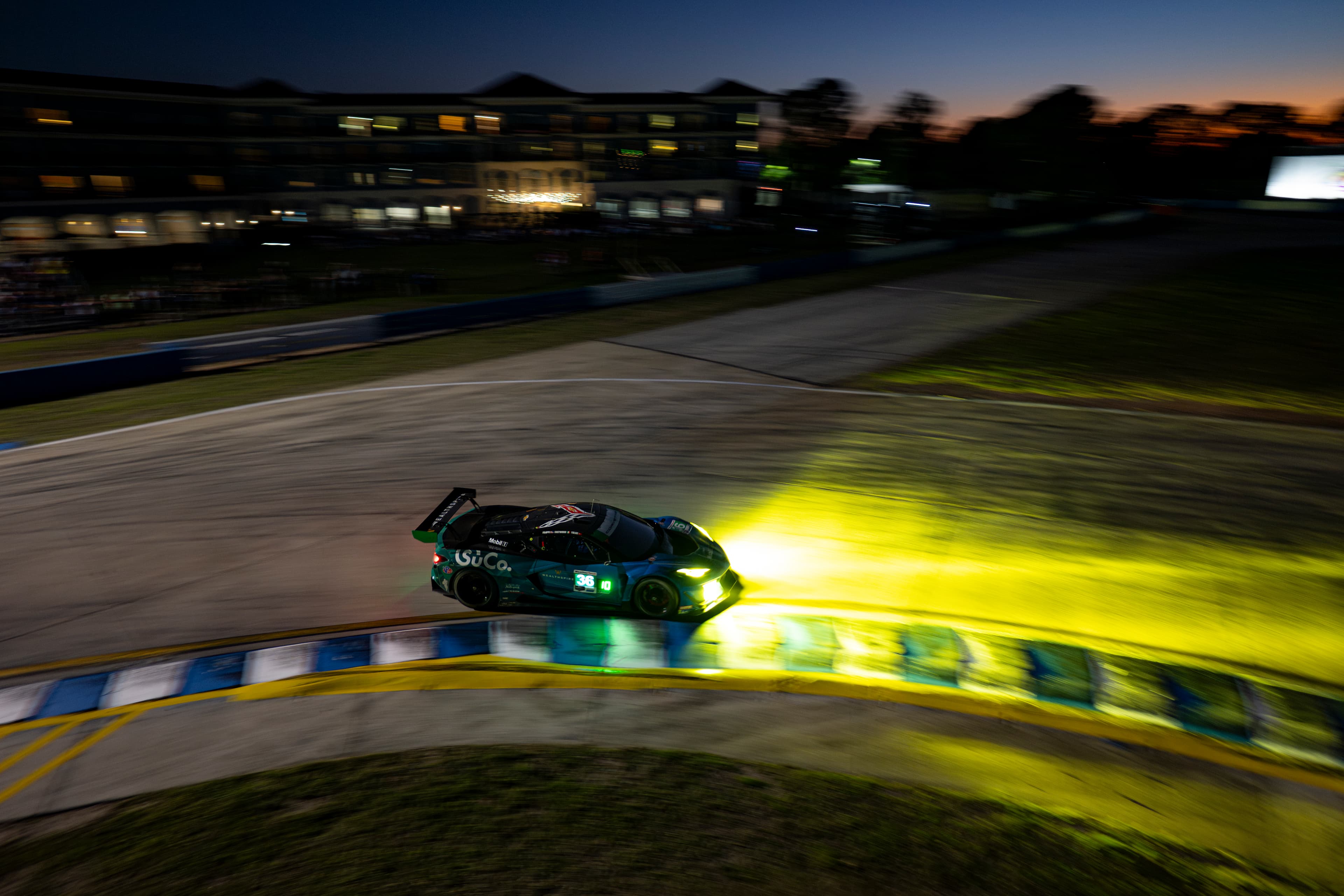
This was my favorite workout of the month. I really enjoyed pushing myself during the gap between Sebring and Long Beach, using that window to sharpen my physical conditioning before heading back to the streets.
This was my favorite workout of the month. I really enjoyed pushing myself during the gap between Sebring and Long Beach, using that window to sharpen my physical conditioning before heading back to the streets.
In professional racing, your fitness is essentially your "headroom." If your body is screaming at you because your lower back is tired or your heart rate is redlined, you lose the mental bandwidth required to hit your marks and manage your tires. This routine is designed to expand that headroom, ensuring the car is always the limiting factor—not the driver.
The Philosophy: Building Functional Armor
In the cockpit, we aren’t looking for "show muscles." We need functional armor. Every movement in this session translates directly to the forces felt behind the wheel. Whether it's the high-load cornering at Sebring or the heavy braking zones of Long Beach, your body needs to be a stable platform.
We start with a focus on compound movements. The Barbell Back Squat and RDLs aren't just about leg strength; they are about stability. A strong lower body and posterior chain allow you to maintain precise pedal modulation even under heavy G-loads, while also protecting your lower back from the fatigue that often sets in during long stints.
The Balance: Strength Meets Stamina
Racing is rarely symmetrical, which is why we incorporate unilateral work like Bulgarian Split Squats. Addressing imbalances ensures that when you're manhandling a car through high-torque steering maneuvers, your shoulders and core are working in harmony rather than over-straining one side.
However, strength is only half the battle. To maintain focus at the end of a race, you need a massive aerobic tank. This is why I follow up heavy lifting with significant endurance work, like a 20k run. This "Hybrid" approach builds cardiovascular resilience, keeping your heart rate steady when the cockpit temperature rises. It also builds mental fortitude; managing your pace over 12.4 miles is exactly like managing a long-distance race stint—it’s all about staying sharp when things get uncomfortable.
The Workout Part 1: The Foundation
Dynamic Warm-Up (2 Rounds)
Bodyweight Squats: 10 reps (slow, controlled depth)
Push-ups: 8 reps (chest to floor)
Kettlebell Deadlifts: 10 reps (light weight to wake up the hamstrings)
Hollow Hold: 20 seconds (engage the deep core)
Pull-ups: 5 reps (assisted if needed)
Main Lifts
Barbell Back Squat: 5 sets x 5 reps. Go moderately heavy; the final sets should be challenging but clean.
Romanian Deadlift (RDL): 4 sets x 8 reps. Focus on a 3-second descent to bulletproof the posterior chain.
Part 2: Mid-Engine Work (Supersets)
Superset A
Pull-ups: 4 sets x Max Reps
Hanging Knee Raises: 4 sets x 10–15 reps
Upper Push
Barbell Bench Press: 4 sets x 6–8 reps. Controlled tempo for upper body balance.
Superset B (3 Rounds)
KB Bulgarian Split Squat: 8 reps per leg.
Kettlebell Swings: 15 reps.
Part 3: The Finisher
Core & Cardio (3 Rounds, minimal rest)
Plank: 30 seconds (hard brace)
Side Plank: 30 seconds per side
Burpees: 10 reps (max effort)
Part 4: The Engine Builder
48 Hours Later
20k Run (12.4 miles): Focus on Zone 2/3 heart rate. This builds the aerobic base and mental discipline required to stay calm and precise during a long-distance campaign.